The Institution
Charleston Area Medical Center & CAMC Institute for Academic Medicine
An active centre for clinical research including FDA-regulated drug and medical device trials, CAMC combined the operational scale of a major regional hospital with a genuine academic research culture — rare outside major metropolitan teaching centres.
Charleston, West Virginia FDA-Regulated Research Academic MedicineAn IMG Arrives in West Virginia
The journey to Charleston was driven by a dream that many International Medical Graduates share: to see American medicine from the inside, to understand how it works, and to earn the right to practice it.
I arrived on a visitor visa — which meant no salary, no formal position, and no institutional safety net. What I had was an introduction to Dr. B. Daniel Lucas Jr. at the CAMC Institute for Academic Medicine, and the willingness to work harder than I ever had before. Dr. Lucas, with characteristic generosity, welcomed me into his research environment and gave me something more valuable than a paycheck: access, mentorship, and the chance to learn how evidence-based medicine is actually made.
CAMC was not a peripheral community hospital. It was an active centre for clinical research — including FDA-regulated pharmaceutical drug and medical device trials — operating with the rigour and infrastructure of a major academic medical institution. Stepping into that environment as a volunteer from Pakistan required humility and adaptability in equal measure. Both served me well.
Mentors Who Made the Difference
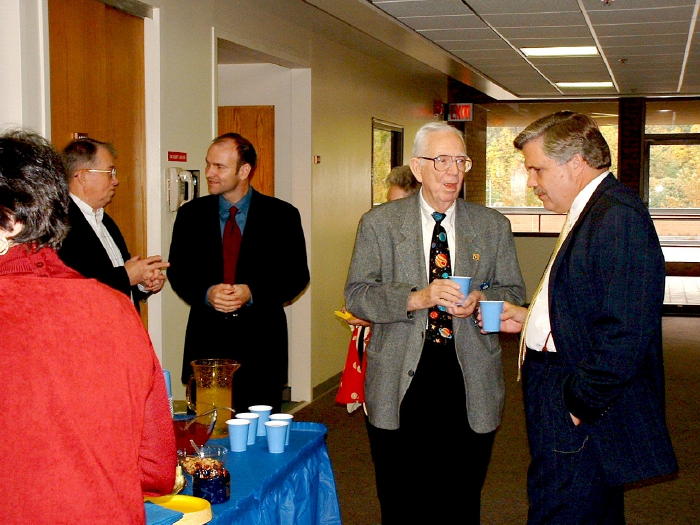
Primary Mentor
Dr. B. Daniel Lucas Jr., Pharm.D.
CAMC Institute for Academic Medicine · West Virginia University
The architect of this entire chapter. Dr. Lucas welcomed an unknown IMG from Pakistan into his research environment with a generosity of spirit that went far beyond professional obligation. His mentorship opened the door to FDA-regulated clinical research, academic pharmacology, and ultimately to peer-reviewed publication. A name I carry with enduring gratitude.
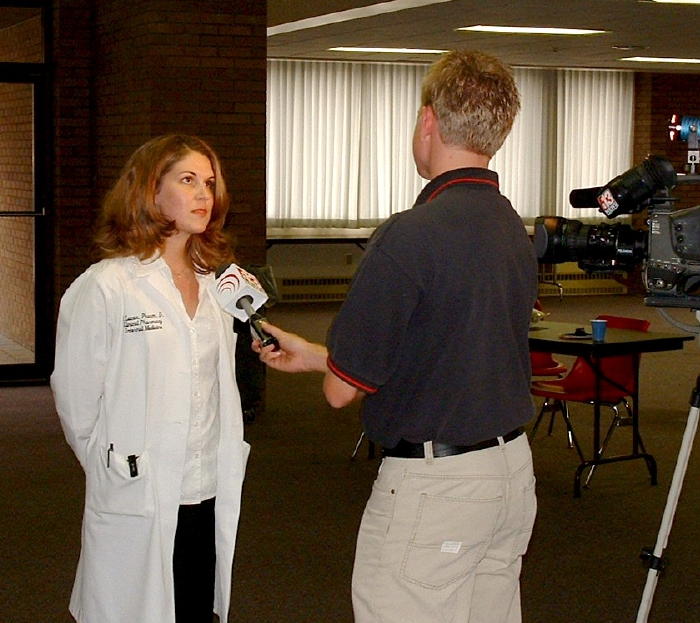
Academic Mentor
Dr. Kristy Holmes Lucas, Pharm.D.
Clinical Pharmacology & Therapeutics · CAMC
Dr. Kristy Lucas brought me into the rhythm of academic pharmacy — the journal clubs, the evidence appraisal sessions, the clinical pharmacology discussions that transformed how I read a research paper. When visa challenges arose, her written confirmation of my participation reflected a personal kindness I have never forgotten. A mentor in the truest sense.
Learning How Evidence Is Actually Made
For a physician trained in Pakistan, reading about clinical trials in journals and watching them unfold in real time are two entirely different experiences. At CAMC, I had the second — and it permanently changed the first.
The institute was running multicenter clinical drug and device trials under FDA oversight. My participation covered the operational breadth of what research actually requires: literature review and protocol familiarisation, scientific data collection and documentation, patient screening processes, informed consent procedures, adverse event monitoring, and the regulatory reporting that keeps FDA-regulated research compliant. I watched — and contributed to — the full arc from research question to publishable finding.
Reading about a clinical trial and being inside one are two entirely different things. At CAMC, I crossed that threshold — and what I found on the other side was a permanent shift in how I understand evidence, rigour, and the ethics of research.
Equally formative were the pharmacy journal club meetings I attended through Dr. Kristy Lucas. These weekly sessions — focused on critical appraisal of medical literature, emerging drug therapies, and evidence-based clinical decision-making — gave me the analytical skills to read a paper and know not just what it says, but whether it should be believed. That skill has been indispensable in every clinical role since.
Research Exposure
FDA-Regulated Trial Operations
Study protocols and patient screening
Informed consent procedures and ethics
Clinical data collection and documentation
Adverse event reporting and safety monitoring
Regulatory compliance — Good Clinical Practice (GCP)
Multidisciplinary research team collaboration
Medical manuscript preparation and publication
Clinical Research, From Every Angle
The CAMC year was not narrow. It covered the intellectual breadth of what it takes to produce credible medical evidence — from the mechanics of trial operations to the culture of academic critical thinking.
Drug & Device Trial Operations
Direct exposure to multicenter FDA-regulated pharmaceutical and medical device trials — from protocol to patient to publication.
GCP & Regulatory Standards
Good Clinical Practice compliance, adverse event reporting, and the ethical framework that governs human subject research in the United States.
Journal Club & Critical Appraisal
Weekly pharmacy journal club meetings — learning to read, question, and evaluate medical literature with the rigour of academic pharmacology.
Multidisciplinary Research Teams
Working alongside investigators, pharmacists, research coordinators, and sponsors — understanding the human architecture that high-quality research requires.
Manuscript Preparation
Contributing to scientific manuscripts from data to draft — gaining firsthand experience of how research findings are prepared for peer-reviewed submission.
Clinical Pharmacology
Immersion in clinical pharmacology and therapeutics through Dr. Kristy Lucas's teaching — bridging laboratory science and bedside decision-making.
A Proud Milestone
Published in the American Journal of Cardiology
The culmination of the research work at CAMC was something I had not dared to fully anticipate when I arrived as a volunteer from Pakistan: my name associated with peer-reviewed scientific work published in American medical journals, including the American Journal of Cardiology.
For an International Medical Graduate working without a salary on a visitor visa, seeing a publication emerge from that year was not merely a professional milestone. It was proof — to myself as much as anyone — that the standards of evidence-based medicine are not geography-dependent. Rigour, curiosity, and careful work produce the same quality of science whether the researcher is from New York or Karachi.
Competencies That Have Never Left
More than two decades later, the skills built at CAMC remain part of every clinical and research role undertaken since — from nephrology OPD to psychiatric outreach to community health data collection.
Clinical Research Methodology
Protocol design, participant screening, longitudinal data tracking, and the operational mechanics of running a clinical study from first patient to final analysis.
FDA Trial Compliance & GCP
Understanding of the regulatory framework governing human subject research — informed consent, adverse event reporting, data integrity, and sponsor obligations.
Critical Appraisal of Literature
The ability to read a medical paper and evaluate not just its conclusions but its methodology, its statistical approach, and the validity of its claims — a skill built in journal club.
Scientific Writing & Publication
Contributing to manuscripts from data to submission — understanding the structure, standards, and process of peer-reviewed medical publication.
Clinical Pharmacology
Evidence-based understanding of drug therapy, clinical trial interpretation, and the pharmacological reasoning that underpins rational prescribing.
Cross-Cultural Research Adaptability
The experience of operating at the highest research standards in an entirely unfamiliar system — and demonstrating that international training is not a limitation but a perspective.
What West Virginia Gave Me
Looking back more than twenty years later, this year was never really about a residency application. It was about something deeper — a shift in how I understand medicine, research, and the obligation of a physician to the evidence. The lessons absorbed at CAMC: scientific curiosity, critical thinking, ethical responsibility, and evidence-based practice — are not confined to that year. They show up in every patient encounter, every clinical audit, every lecture note curated for a younger colleague. Dr. Lucas opened a door. What came through it has never stopped arriving.
From West Virginia to New York — and Home
The CAMC chapter did not stand alone. It was part of a broader American arc that also included a Clinical Research Fellowship at NYU Medical Center's Aging and Dementia Research Center under Professor Barry Reisberg — where the neurocognitive science of Alzheimer's disease became the second pillar of my American research foundation.
Together, CAMC and NYU gave me something that neither posting could have provided alone: a dual grounding in the operational mechanics of FDA-regulated trials and the intellectual rigour of frontier academic research. That combination — regulatory discipline and scientific curiosity — came home to Pakistan with me, and has shaped every research-informed clinical role since.